How Rockstar Made Vice City Feel Real: The Brand Strategy Behind GTA VI's Miami Takeover

Imagine landing in Miami and looking up to see a sign welcoming you to Vice City. Not Miami. Vice City. The name of a fictional place from a video game.
Then you see an advertisement for Burger Shot, a burger chain that doesn't exist. At a basketball game, people are wearing jerseys designed around that same imaginary city. A nightclub you could actually walk into has become the club from the game. For a moment, the line between the two worlds feels a little less obvious.
That's the part of the GTA VI launch I can't stop thinking about. Not the biggest number in a press release, but the strange moment when something designed on a screen begins to change what happens in the real world.
Rockstar Games didn't just persuade people to look at an advertisement. It gave millions of people a place they already felt they knew, then invited them to find pieces of it in real life. I think there's a remarkable brand strategy story in that, and it begins years before the first Miami billboard.

A city existed in people's imaginations long before the billboards
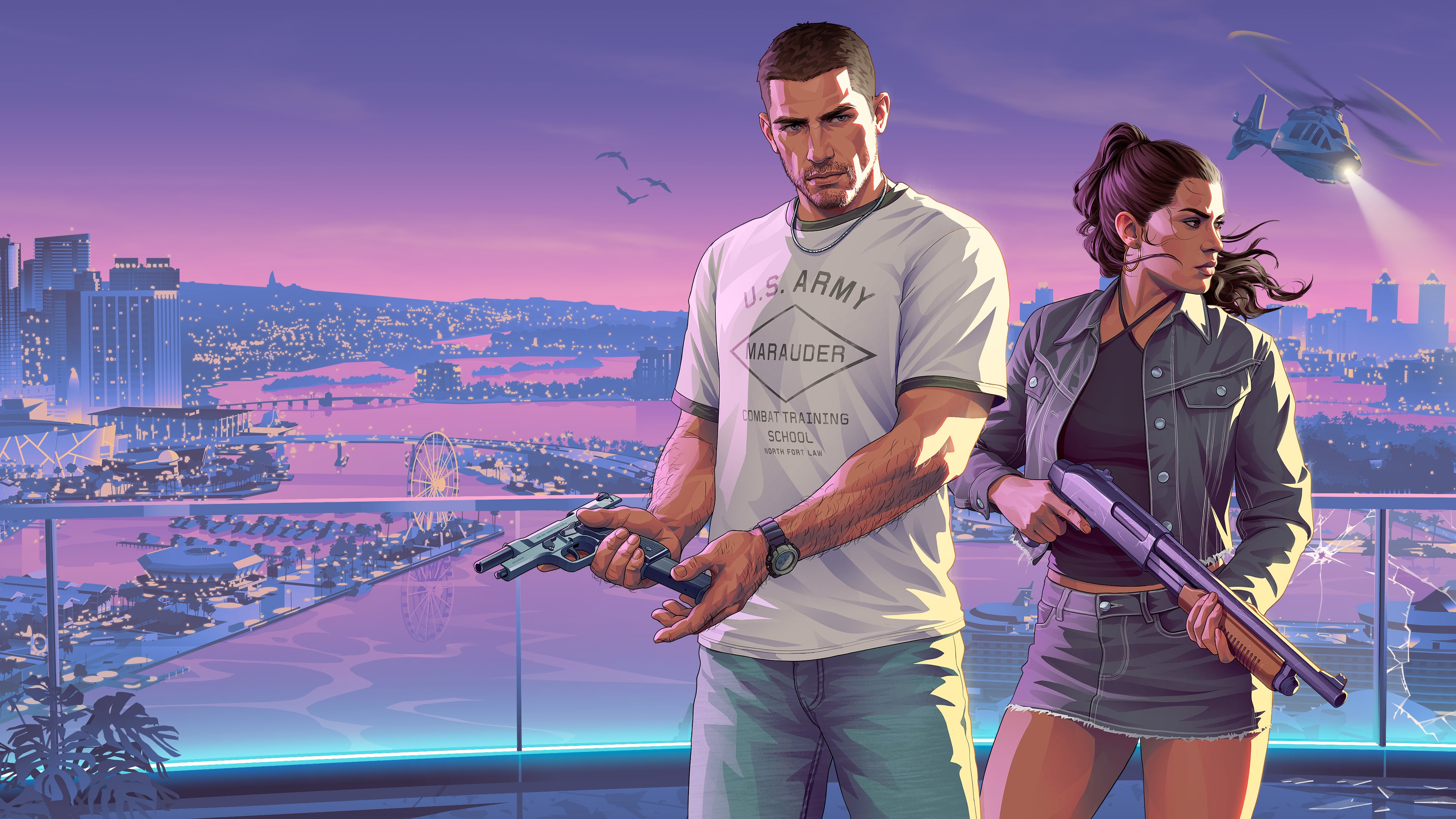
If you've played or even just followed Grand Theft Auto for years, Vice City is more than a location name. It brings a feeling with it. Neon, heat, music, nightlife, humour, excess. People don't just recognise the words. They recognise the world they point to.
This matters because Vice City was familiar long before GTA VI's launch. Grand Theft Auto: Vice City was released in 2002. People already associated the name with a stylised version of South Florida: tropical colour, excess, nightlife, speed, celebrity and satire. That earlier game created associations the 2026 release could revive and expand. The design language did some of the work before the next advertisement appeared.
In brand strategy, these are memory structures: distinctive ideas and cues that help someone identify a brand and retrieve what they know about it. A colour combination isn't valuable simply because it's attractive. A visual motif becomes powerful when repeated encounters help people associate it with one particular brand, mood or experience.
Rockstar's world-building makes that mechanism unusually visible. Vice City isn't just a geographic label on a map. It's a network of recognisable details, from the typography and atmosphere to its fictional businesses, music, characters and social commentary. Those details work together, so a single image or phrase can call up a much larger set of expectations.
That gives the business a massive advantage: the campaign doesn't have to teach people from zero what this universe is. It can activate something the audience already knows. A new business can't borrow thirteen years of anticipation, but it can learn to build consistency rather than reinventing its presentation each month.
I love this distinction because it turns a familiar design conversation on its head. A brand isn't simply what you can see. It's also everything that springs to mind because of what you've seen before. Rockstar had been building those associations long before it asked anyone to buy GTA VI.
The design work hiding in plain sight: all the brands inside Vice City
I want you to picture the design work inside the game for a moment. You're driving through Vice City, you stop at a traffic light, and there's a fast-food sign on the other side of the road. You're not supposed to stop and admire its typography. You're supposed to believe that restaurant has existed there for years.
That's a very different creative challenge from designing one attractive game poster. Rockstar has to make an entire fictional economy feel recognisable. Burger Shot needs to look and sound like a burger chain. Cluckin' Bell needs its own fast-food personality. Drinks like Sprunk and eCola need labels, slogans and advertising. Shops need signage and shopfronts. Banks, apps, garages and salons need identities that make sense for the kinds of businesses they are.
Some brands are long-running GTA fixtures. Others are newer to GTA VI's version of Leonida. Rockstar's official screenshots show businesses and retail environments, including Stock 305, Goodtime Gear and specialist shops. Its fictional digital world also includes WhatUp, a take on WhatsApp; Sahara, a retail platform parody; RydeMe, a transport app; and SnapMatic, a social platform. These aren't merely names sitting in a list. They're cues that make the world behave like a place people live in.
Think of what sits behind one believable fictional store. Naming. Logo design. Typography. Product packaging. Menu or interface design. Advertising copy. Colour systems. Signage. Store layout. Promotional posters. Then the environment, lighting and technical work needed to make all of those assets function inside a vast open world. It requires collaboration between writers, art directors, graphic designers, environment artists, 3D artists and developers. We don't have Rockstar's internal production logs, so I won't invent a staff count or number of hours. But the scope is clear.
And the brilliance is that most players won't consciously notice any of it. A convincing world makes all that design feel ordinary. That's what makes it convincing. You don't spend every second thinking about how a real city was branded. You simply recognise the shops, products and patterns around you.

The fictional businesses do another job too: satire. Rockstar can say something about consumer culture simply by creating a brand that looks suspiciously familiar, then pushing its name, slogan or behaviour to an absurd extreme. The visual identity becomes part of the storytelling, not decoration pasted on afterwards.
Now comes the twist. Some of those fictional identities escaped the game. Burger Shot and eCola appeared in real Miami advertising. At the Miami Heat activation, game-inspired food brands became part of the actual venue experience. And when GTA VI launched, WhatsApp temporarily changed its X profile to reference WhatUp, the game's parody of its own brand. When a real technology company starts playing along with your fictional company's identity, you've done more than design background scenery.
That is the detail I think deserves more attention. Rockstar wasn't promoting one brand inside a world. It had spent years developing a world filled with smaller brands, all of which could become recognisable parts of the larger GTA identity.
Then the imaginary city began appearing in the real one
GTA VI takes place in the fictional state of Leonida, with Vice City inspired by Miami. Usually, a fictional world borrows from a real location to make the story believable. Rockstar then reversed that relationship. The real location adopted elements of the fictional place.
The Kaseya Center, home of the Miami Heat, carried an enormous 'Welcome to Vice City' rooftop sign. Miami-Dade County's October announcement described a US$3.9 million package that covered the sign and further promotions at Miami International Airport, PortMiami, transportation spaces and other county sites. An earlier US$975,000 arrangement for the arena sign was included in that package, and the company was responsible for production and installation costs.
This is the nuance I find especially interesting: the county wasn't merely giving Rockstar a backdrop. Officials described the arrangement as a way to generate revenue and channel international attention toward the community. In other words, the campaign became valuable to the place being used as its medium.
This is where the campaign stops feeling like conventional advertising to me. A city's landmarks and spaces became part of the storytelling. People who weren't even planning to buy the game could encounter its fictional name in the place that inspired it.

The transformation extended beyond a single billboard. Reporting by the Associated Press documented murals, transport advertising and Miami Beach promotions. The campaign did something that traditional outdoor advertising often can't: it turned the city itself into a photo opportunity, a talking point and a place to participate.
A basketball team helped make Vice City feel like somewhere you could visit
On 18 November, the Miami Heat hosted 'A Night in Vice City' against the Milwaukee Bucks. The arena featured a special court, themed uniforms, music and concessions built around in-game food brands such as Burger Shot and Cluckin' Bell. The Associated Press reported that the allotment of special jerseys at the arena sold out in roughly 90 minutes.
The collaboration had reportedly been in development for more than two years. That's important. What appeared to fans as one spectacular match-night activation was the result of substantial planning across creative direction, logistics, merchandise, licensing and the live-event experience.
The Heat also weren't strangers to the visual language of 'Vice'. Their earlier City Edition uniforms had already used the neon Miami aesthetic. That made the partnership more natural than placing a random game logo onto an unrelated sports property. There was genuine overlap in geography, colour, identity and audience culture.
This is a useful distinction between a collaboration and a logo swap. The strongest partnerships don't just combine two follower counts. They connect recognisable worlds in a way that gives each side a reason to participate. Rockstar gained a real-world sports platform. The Heat gained relevance to a massive entertainment moment and exclusive merchandise fans wanted to own.
Imagine buying one of those jerseys. You're not buying a download or a game accessory. You're wearing a connection between your city, your team and an imaginary place you've become attached to. That is a very specific kind of brand attachment, and it works because both identities already mean something.
The nightclub that crossed from the screen into Miami
Miami's E11EVEN nightclub took the idea even further. From 6 November through 6 December 2026, it transformed into NINE1NINE, the fictional Vice City nightclub inspired by the venue. Signage changed throughout the location, in-game vehicles were displayed, limited-edition merchandise was sold and live events coincided with the game's release.
A nightclub takeover is different from purchasing space on a screen. Guests can enter it, photograph it, wear its merchandise and tell other people about being there. The brand is no longer only a message. It's an experience that has been designed so people can participate in it.
From a strategy perspective, this is a form of brand-world extension. The key is not just consistency of colour or font. It's consistency of meaning. A venue, an event, an object and an online post can look completely different while still belonging unmistakably to the same world.
For the people who attended, the experience became a memory. Not a memory of being advertised to, but of going somewhere. That's why the word 'experience' deserves more thought than simply placing a logo on a pop-up wall.

And then there's time. Most brand campaigns have a launch date, but the emotions around GTA VI didn't start in launch week. People had been waiting years, bringing memories of older games and imagining what Rockstar might create next.
The years of anticipation underneath one launch
The attention didn't suddenly materialise in the launch week. In December 2023, the first GTA VI trailer generated over 93 million views in its first 24 hours, according to YouTube, setting the platform's then-record for the 24-hour debut of a non-music video. This was nearly three years before release.
Think about what that means. The audience was already investing time, attention and emotion in a product they couldn't yet use. Every trailer analysis, fan theory, reaction video and screenshot breakdown increased familiarity with the world. The campaign wasn't only delivering information. It was giving people material to interpret together.
There's an important strategic distinction here between visibility and demand. Visibility means someone has encountered your message. Demand means enough has happened before the moment of purchase that they actively want what you're offering. Rockstar's promotional content could travel so far partly because an enormous amount of demand had already accumulated.
This doesn't mean every brand needs to manufacture mystery or artificially hold something back. It means anticipation works best when people have a reason to believe the thing they're waiting for will be worth it.
People didn't just share the campaign. They became part of it
Consider the small rituals behind those numbers. Someone sends a trailer to a friend. Someone pauses a screenshot and notices a familiar street. Someone starts a conversation about what might happen next. That's not just a social metric. It's a relationship with an imagined place, carried between real people.
Meltwater recorded more than 10.5 million online mentions and 3.13 billion engagement actions around GTA VI from May to its November 2026 launch. The company also reported that creators and fans accounted for more than 96% of engagement across the top-performing launch posts it examined.
That last statistic needs care. It doesn't mean 96% of every conversation about GTA VI came from fans. It describes Meltwater's analysed sample of leading posts. It still makes an important point: some of the most effective distribution was happening on accounts Rockstar didn't own.
Memes, fan reactions, video essays, countdowns and debates can become informal extensions of the brand. People create them because there's something worth discussing. That is a different dynamic from a company repeatedly pushing the same sales message from its own social accounts.
Not every conversation was positive. Meltwater also noted negative sentiment in parts of the wider discussion. Brand prominence creates criticism as well as enthusiasm. But audiences had a huge shared vocabulary for GTA: visual cues, characters, locations and stories they could use to communicate with one another. Shared culture makes a brand easier to reference, remix and circulate.
I wouldn't call this 'free marketing'. The attention rests on expensive game development, a long-established franchise and years of audience-building. What it illustrates is a compounding effect: strong recognition and a participatory world can give paid and owned marketing more opportunities to generate earned attention.
When the sales results arrived, they were almost too large to picture. But the number makes more sense when you remember all those years of anticipation. The question isn't just how much the launch made. It's how many separate things had to work together for so many people to want the same experience on the same day.
A $3.79 billion first day, and the question I think matters more
According to Take-Two's 20 November announcement, GTA VI generated an estimated US$3.79 billion in worldwide retail sales on launch day. It also recorded 32.5 million pre-release unit sales. Both figures indicate enormous purchase demand, and both deserve careful interpretation.
Retail sales aren't the same as Take-Two's net revenue or profit. Pre-release unit sales are part of the commercial launch story, not a separate number to multiply and add again to the first-day total. The US$3.9 million Miami-Dade advertising package is one regional arrangement, not Rockstar's total brand investment. We don't know precisely how many copies were sold because someone saw a particular arena sign or nightclub activation.
The more useful question is how a company reached a point where tens of millions of customers were ready to purchase before release. The answer includes the quality and reputation of earlier games, years of anticipation, distribution, product accessibility, the scale of the franchise and the marketing system surrounding it.
Brand equity belongs inside that explanation, but it isn't the whole explanation. I think separating those factors makes the case more compelling, not less. If every good commercial outcome gets labelled 'branding', the word stops telling us anything specific.

Here's another slightly surreal consequence of making people care about a fictional place: the original real-world location can start to feel like a destination connected to the story. Miami wasn't only the reference point anymore. To fans, it was also a way of getting closer to Vice City.
Could a fictional place change how people travel?
GTA VI also raises a fascinating question about place branding: can a fictional location influence how people feel about a real one? In data reported by Business Insider, travel company eSky said searches for flights from Poland to Miami rose 215% between 21 September and 15 November 2026 compared with the same period a year earlier. Across its Latin American sites, inquiries increased about 200%. The company reported a 56% year-on-year increase in Miami package bookings.
Those figures are signals of travel interest, not proof that GTA VI caused all the growth. Search activity is not the same as arrivals, and tourism changes for many reasons. We don't yet have reliable evidence establishing how many additional visitors came to Miami specifically because of this campaign.
Even with that limitation, the brand interaction is worth studying. A city that lent visual inspiration to a game is now receiving attention through the game's fictional identity. The destination and the entertainment property are borrowing meaning from each other. That's a reciprocal brand relationship, and it shows how a well-developed world can influence interest beyond the category in which it began.
Not everyone was comfortable inviting Vice City into Miami
It would be too tidy to write about the campaign without mentioning the opposition. Some Miami-area officials raised concerns about associating public spaces with a franchise famous for fictional crime and violence. Others argued that the visibility and short-term commercial benefits were worthwhile.
That debate is evidence of how powerful brand associations can be. The same irreverent identity that makes GTA instantly recognisable can be attractive to fans and commercially uncomfortable for public institutions. Brand strength doesn't mean every audience responds positively. It means a brand stands for something recognisable enough to produce a response.
There is a strategic risk when brands enter public space. The audience isn't limited to people who opted into a game, a festival or an ad campaign. Residents, local businesses and elected officials also become stakeholders. Creative ambition and cultural fit have to be weighed alongside exposure and revenue.
What makes this case so interesting to me isn't a mythical marketing formula or one perfect piece of creative. It's the accumulation of decisions, made across a long period, that eventually gave one fictional place extraordinary reach.
What I think Rockstar actually got right
If I strip away the gaming industry, enormous budgets and headline sales numbers, I see five connected decisions worth paying attention to.
A recognisable platform, not a collection of assets
The brand was coherent enough to appear across a digital world, an arena, an airport, a nightclub and merchandise while remaining identifiable. That requires a system of associations, visual language and creative rules. A logo alone couldn't carry it.
Partnerships with a reason to exist
Miami, the Heat and E11EVEN weren't merely rented surfaces. Each had a meaningful connection to the campaign's geography or culture and a potential benefit of its own. That's why the activations felt like extensions of the story rather than random sponsorships.
Audience participation was designed in
A visitor could photograph the sign, attend a game, purchase a jersey or step into a nightclub. Fans could dissect a trailer, make a meme or share a location comparison. The campaign gave people ways to do something with the brand, not just see it.
An existing product reputation supported the promise
An impressive visual identity can attract interest, but it can't independently sustain demand for thirteen years. Rockstar's previous games, technical ambitions and product track record mattered. Branding helped carry and amplify expectations grounded in an actual history of delivering experiences.
The work moved from attention to commercial behaviour
Sales, merchandise purchases, event participation and travel searches point to different forms of action. Not all can be causally assigned to the campaign, but together they demonstrate why brand analysis should look beyond impressions and follower counts.
The real lesson: brands become valuable when their meaning travels
The part of GTA VI's launch that stays with me isn't the size of the rooftop sign. It's how much meaning people could attach to it. Two words, 'Vice City', were enough to connect a place, a game, twenty-four years of franchise memory, a basketball event, a nightclub and a global online conversation.
That's the kind of thing I mean when I talk about brand strategy. Not a list of deliverables, not an aesthetic trend, and not the idea that a new logo somehow creates revenue on its own. It's the deliberate work of deciding what a business should be known for, building distinctive ways to express it, and carrying those associations consistently enough that people can recognise and respond to them.
Most brands will never transform a city. Nor should they need to. But studying what happened when Rockstar brought Vice City into Miami gives us an unusually clear picture of what happens when identity, experience, culture, distribution and demand line up.
The campaign is spectacular. The more interesting achievement is everything that had to be true about the brand for that spectacle to mean something.
Written by Jasmine Sotiropoulos, Creative Director and Brand Strategist at ReWorded. Research checked 22 November 2026.


